Psychiatric Crisis System Consulting

Designing, Implementing and Transforming Coordinated Systems of Crisis Care

Psychiatric crisis systems are among the most complex, high-stakes operational environments in health and human services. They sit at the intersection of clinical care, law enforcement, Medicaid managed care, licensure, regulation, and community-based provider networks. Getting them right means lives saved, avoidable hospitalizations prevented, and communities made safer. Getting them wrong has consequences that are both human and financial.

Hess III Consulting has been working inside psychiatric crisis systems since 2011 — not as observers, but as system architects, independent evaluators, business intelligence analysts, and implementation leads. We have worked with the largest psychiatric crisis organization in the United States, produced Crisis System 360° Evaluations, designed collaborative crisis protocols, authored clinical policies and procedures for crisis providers in active operation today.

When government and public sector payers and providers need expertise in psychiatric crisis system design, evaluation, or transformation — they call us.

pexels-rdne-6519862

Psychiatric Crisis System Consulting Services

Our psychiatric crisis consulting practice spans the full system lifecycle — from initial system design through operational implementation, independent evaluation, and continuous quality improvement. We work with States, Counties, Cities, Medicaid managed care organizations (MCOs), certified community behavioral health centers (CCBHCs), community mental health centers, and nonprofit organizations to strengthen the Behavioral Health Coordinated System of Crisis Care; ensuring residents have someone to talk to, someone to respond, and a place to go. 

Someone to call

Someone to call

Crisis System Design and Implementation

  • Design of comprehensive psychiatric crisis systems of care including crisis hotlines, specialty hotlines (e.g. Veterans, Law Enforcement etc.), warmlines, mobile crisis teams, crisis stabilization units (CSUs), respite, Welcome Rooms, clubhouses, recovery centers, post crisis wraparound, Mobile Response and Stabilization Services, post-crisis follow-up care, closed loop referral systems for unmet social determinants of health and health related social needs (SDOH/HRSNs). 
  • Development of models of care, clinical protocols, desktop procedures, and staff workflows aligned with SAMHSA's National Behavioral Health Crisis Care Guidance standards.
  • Crisis system design for Medicaid managed care organizations entering new markets or restructuring existing contracts, including geographic service area (GSA) alignment, provider network development, and performance-based payment mechanism design.
  • Development of mobile crisis response protocols meeting or exceeding defined response time requirements.
  • Design of psychiatric crisis de-escalation policies and procedures including DTS/DTO/PAD/GD risk assessment frameworks, emergency admission processes, and assertive outpatient treatment compliance.
  • Design of crisis referral pathways and coordination protocols.

Crisis System Independent Evaluation

  • Independent 360-degree evaluation of psychiatric crisis systems — including adult crisis services, children’s crisis services, mobile response, telephonic crisis, crisis stabilization units, and involuntary assertive outpatient treatment — with findings, recommendations, and implementation support.
  • Root cause analysis of critical incidents, corrective action plan development, and structured performance improvement planning.
  • Evaluation of crisis system performance against local, State, and federal compliance and accreditation standards.
  • Facilitation of stakeholder listening sessions with providers, members, families, first responders, law enforcement, and government partners.
  • Development of performance benchmarks and quality metrics including: crisis response times, disposition rates, follow-up contact rates, inpatient diversion rates, member satisfaction, and clinical outcome measures.
  • Production of published evaluation reports, white papers, and technical reports for regulatory agencies, MCOs, and public distribution.
pexels-alphatradezone-5833784

First Responder Partnerships

Crisis System Multi-Stakeholder Coordination and Collaborative Protocols

  • Design of comprehensive psychiatric crisis systems of care including crisis hotlines, specialty hotlines (e.g. Veterans, Law Enforcement etc.), warmlines, mobile crisis teams, crisis stabilization units (CSUs), respite, Welcome Rooms, clubhouses, recovery centers, post crisis wraparound, Mobile Response and Stabilization Services, post-crisis follow-up care, closed loop referral systems for unmet social determinants of health and health related social needs (SDOH/HRSNs). 
  • Development of models of care, clinical protocols, desktop procedures, and staff workflows aligned with SAMHSA's National Behavioral Health Crisis Care Guidance standards.
  • Crisis system design for Medicaid managed care organizations entering new markets or restructuring existing contracts, including geographic service area (GSA) alignment, provider network development, and performance-based payment mechanism design.
  • Development of mobile crisis response protocols meeting or exceeding defined response time requirements.
  • Design of psychiatric crisis de-escalation policies and procedures including DTS/DTO/PAD/GD risk assessment frameworks, emergency admission processes, and assertive outpatient treatment compliance.
  • Design of crisis referral pathways and coordination protocols.

Unmatched Experience Designing Psychiatric Crisis Systems

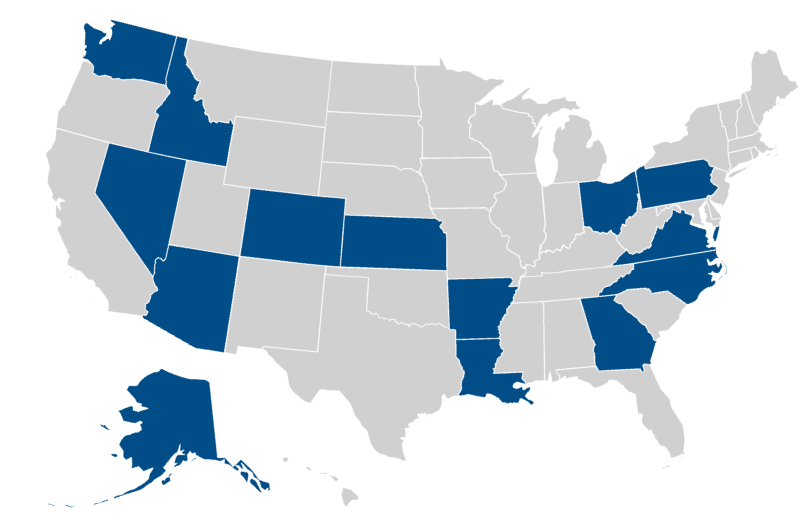
Hess III Consulting has over 15-years experience designing, implementing and optimizing psychiatric crisis systems including crisis call centers, mobile teams, stabilization units, inpatient facilities, and involuntary treatment in Alaska, Arizona, Arkansas, Colorado, Georgia, Idaho, Kansas, Louisiana, Nevada, North Carolina, Ohio, Pennsylvania, Virginia, and Washington.

Hess III Consulting's Crisis Experience

We've Been Trusted By:

Mercy Care
Magellan Health
Crisis Response Network JPG
Centene
Molina Healthcare
International
Connections Health Solutions

Frequently Asked Questions About Psychiatric Crisis System Consulting

What is a psychiatric crisis system?

A psychiatric crisis system is a coordinated network of services that responds to behavioral health emergencies — typically built around a 24/7 crisis call center, mobile crisis teams that respond in the community, and crisis stabilization facilities such as Crisis Stabilization Units (CSUs) and 23-hour Urgent Psychiatric Centers (UPCs). Arizona's Maricopa County model — anchored by providers like Solari Crisis & Human Services, Connections Health Solutions, Mind 24-7, Horizon Health and Wellness, and La Frontera EMPACT-SPC — is widely cited by SAMHSA as the national benchmark for the "someone to call, someone to respond, somewhere to go" framework.

What does a psychiatric crisis system consultant do?

A psychiatric crisis system consultant designs, evaluates, and implements the operational and clinical infrastructure that allows a region to respond to behavioral health emergencies without defaulting to emergency rooms or jails. Hess III Consulting's crisis work includes system design and gap analysis, mobile crisis team development, CSU and UPC network strategy, multi-system collaborative protocols across law enforcement, courts, corrections, and hospitals, regional crisis funding and rate design, and independent 360-degree crisis system evaluations — including the Maricopa County Crisis System 360 Degree Evaluation. We've designed, implemented and optimizes highly coordinated behavioral health crisis systems of care in 15 States. 

How is Arizona's crisis system different from other states?

Arizona operates the most mature regionalized psychiatric crisis system in the United States, funded through a blended model of AHCCCS Medicaid, Mental Health Block Grant, county, and state general fund dollars, and administered through specialty managed care organizations known as Regional Behavioral Health Authority (RBHA) contracts. The system pairs a single regional crisis line with mobile teams and no-wrong-door crisis facilities that accept law-enforcement drop-offs in under ten minutes — a design states from Virginia to Washington are now replicating under the 988 Suicide and Crisis Lifeline rollout.

How does 988 implementation affect state and county crisis systems?

988 created a federal front door to crisis care but did not fund the "respond" and "somewhere to go" layers underneath it — meaning states and counties must build or expand mobile crisis capacity and crisis stabilization beds to absorb the volume 988 surfaces. Effective 988 implementation requires governance alignment between the state Medicaid agency, the 988 administrator, MCOs, RBHAs (or equivalent), and provider networks. Hess III Consulting advises states, counties, and managed care organizations on 988 readiness assessments, mobile crisis Medicaid State Plan Amendments, and crisis continuum gap analyses.

Who pays for psychiatric crisis services — Medicaid, the state, or counties?

Psychiatric crisis services are funded through a layered mix of Medicaid (including the American Rescue Plan Act mobile crisis option at 85% FMAP for the first three years), Mental Health Block Grant dollars, state general fund appropriations, county levies, and increasingly 988 telecom fees. Sustainable crisis systems blend these sources so that no single payer carries the full load — a model Hess III Consulting has helped design and defend in proposal and rate-setting work across Arizona, Texas, Tennessee, and other states.

How do you hire Hess III Consulting for crisis system work?

Engagements typically start with a scoping call to define whether the need is system design, independent evaluation, procurement support, 988 readiness, or mobile crisis Medicaid strategy. Hess III Consulting has supported the largest psychiatric crisis providers in the United States — including Connections Health Solutions, Solari Crisis & Human Services, RI International, Community Bridges Inc.. Mind 24-7, Terros Health, Horizon Health and Wellness, Magellan Health, and La Frontera EMPACT-SPC — and has advised state Medicaid agencies, RBHAs, MCOs, and county governments on crisis continuum design. 

Are You Ready to Transform Your Psychiatric Crisis System?

Connect with Us

We love getting to know good people doing good things. Reach out and schedule a free consultation. We'll gladly share early insights and help figure out how we can best support you and your organization. Absolutely no commitment required.

  • (480-559-1051
  • info@hess3.com